Finance
Navigating the Turbulent Tides: A Resilient Market's Triumph Over Adversity
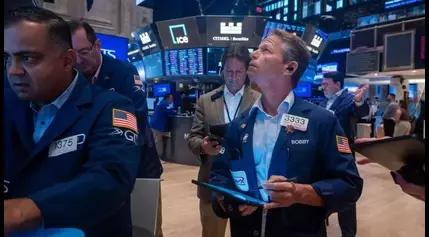
On August 5th, the global financial landscape was shaken to its core, as the Asian trading session witnessed a staggering 12% plunge in Japan's benchmark Topix share index, marking its worst day since 1987. The ripple effects were felt across the region, with South Korea and Taiwan experiencing equally dramatic declines of 9% and 8%, respectively. As European markets followed suit, the VIX index, a measure of market volatility, soared to levels not seen since the early days of the COVID-19 pandemic and the aftermath of the Lehman Brothers collapse in 2008. Amidst the chaos, even the traditionally safe haven of gold saw its price fall, suggesting that investors were liquidating assets to stay afloat. The previous week's global market rout appeared to be spiraling into a full-blown crisis.Weathering the Storm: Resilience and Adaptability in Turbulent Times
Navigating the Asian Market Turmoil
The Asian trading session on August 5th witnessed a seismic shift in the financial landscape, as Japan's Topix index plummeted by a staggering 12%, its worst performance since the infamous Black Monday of 1987. This dramatic decline sent shockwaves through the region, with South Korea and Taiwan experiencing equally significant drops of 9% and 8%, respectively. The magnitude of these losses underscored the fragility of the global markets, as investors grappled with a perfect storm of economic and geopolitical uncertainties.The Asian markets' vulnerability was further exacerbated by the surge in the VIX index, a barometer of market volatility. This index, which measures the expected magnitude of share price fluctuations, soared to levels not seen since the early stages of the COVID-19 pandemic and the aftermath of the Lehman Brothers collapse in 2008. This spike in volatility reflected the heightened sense of uncertainty and risk that permeated the markets, as investors struggled to navigate the turbulent waters.The Ripple Effect: European and Global Markets in Turmoil
The shockwaves from the Asian market turmoil quickly spread to European markets, which also experienced significant declines. This synchronization of global market movements highlighted the interconnectedness of the financial system, as events in one region had a profound impact on the performance of markets across the world.The VIX index, which had already spiked in the Asian trading session, continued to climb as the European markets opened, reflecting the heightened sense of uncertainty and risk that had gripped the global financial landscape. Investors, grappling with a myriad of economic and geopolitical factors, sought to protect their assets, leading to a widespread sell-off that further exacerbated the market's downward spiral.The Enigma of Gold's Decline: Liquidity Concerns or Broader Implications?
Amidst the chaos, one unexpected development was the decline in gold prices, a traditional safe haven asset. Typically, gold is seen as a hedge against market volatility and economic uncertainty, as investors flock to it during times of turmoil. However, on August 5th, the price of gold fell, suggesting that investors might be liquidating their holdings in order to raise cash and stay afloat.This puzzling behavior raised questions about the underlying dynamics of the market. Was the decline in gold prices a reflection of broader liquidity concerns, as investors sought to free up capital to meet their immediate needs? Or did it signal a deeper shift in investor sentiment, where the traditional safe haven status of gold was being called into question?Resilience and Adaptability: The Key to Weathering the Storm
Despite the overwhelming sense of doom and gloom that permeated the markets on August 5th, the global financial system demonstrated remarkable resilience and adaptability. While the initial market reactions were undoubtedly severe, the ability of investors and policymakers to navigate the turbulent waters and mitigate the potential fallout was a testament to the strength and flexibility of the modern financial landscape.The rapid response of central banks and regulatory authorities, coupled with the agility of market participants, played a crucial role in stabilizing the markets and preventing a full-blown crisis. Policymakers swiftly implemented measures to inject liquidity, provide support to struggling sectors, and restore confidence in the financial system. Meanwhile, investors demonstrated their ability to adapt to the changing conditions, adjusting their strategies and portfolios to navigate the volatile environment.The resilience and adaptability displayed during this tumultuous period underscored the inherent strength and dynamism of the global financial system. While the challenges were formidable, the ability of the markets to weather the storm and emerge stronger is a testament to the ingenuity and resilience of the financial community.