
Every gardener should know how to get rid of poison ivy when it pops up around the yard. If the sap from this plant comes in contact with your skin, a chemical called urushiol in the sap can cause unpleasant rashes and blisters that can last for weeks. The chemical can still cause rashes even after the plant is dead, so getting rid of poison ivy in your yard safely requires caution and perseverance.
Here's how to identify poison ivy correctly, and how to get rid of the plant whenever it pops up in your garden or yard.
Identifying Poison Ivy
If you remember the phrase, “leaves of three, let it be,” you’re part way to identifying poison ivy. However, not every plant with three leaflets is toxic. Some, like raspberries and blackberries, are delicious. Here's how to tell poison ivy from look-alike plants.
- Poison ivy has compound leaves, meaning several leaflets are on one petiole or stalk. The leaflets are in groups of three, with the central leaflet the only one that appears to have a stem. The two side leaflets appear stemless. The leaflets are arranged in an alternate pattern on the stem, one side, then the other.
- Poison ivy leaves are often copper or burgundy in spring, shiny dark green in summer, and pale yellow or reddish-orange in autumn.
- The leaves are pointed at the tip and can have smooth or toothed edges on the same plant.
- Poison ivy can grow as a low groundcover plant, a small shrub, or a vine. When it vines and climbs trees, the older vines are covered in small, fine, reddish hairs—a dead giveaway.
- Poison ivy blooms with small clusters of light green flowers. It produces hard, white berries in autumn, another easy distinguishing feature. If it has blue or red berries, it isn’t poison ivy.
Best Ways to Get Rid of Poison Ivy Plants
There are several methods for getting rid of poison ivy in your yard, but wearing protective clothing is extremely important no matter how you deal with poison ivy plants. Long pants, a long-sleeved shirt, boots, and gloves are a must. If your hair is long, put it up under your hat. Wear safety glasses to prevent a leaf or tendril from whipping in your eye and a face mask or scarf over your face. Taking a minute to don proper protective clothing is far less painful than dealing with a rash for two or three weeks.
1. Pull Poison Ivy by Hand
One of the most effective and fastest methods for getting rid of poison ivy is hand pulling, which lets you get the whole plant and, hopefully, the roots. Hand-pulling is best when dealing with only a few plants or when poison ivy grows in the yard where people could still touch dead vines or leaves.
Put your hand into a plastic sack and grip the plant through it. When you've uprooted the plant, invert the bag over the entire plant to contain it and tie the bag closed. Rake up and collect all the vegetative matter the poison ivy was touching, too. Cover the area with 4 to 6 inches of mulch to prevent any contaminated soil or plant matter from coming in contact with people.
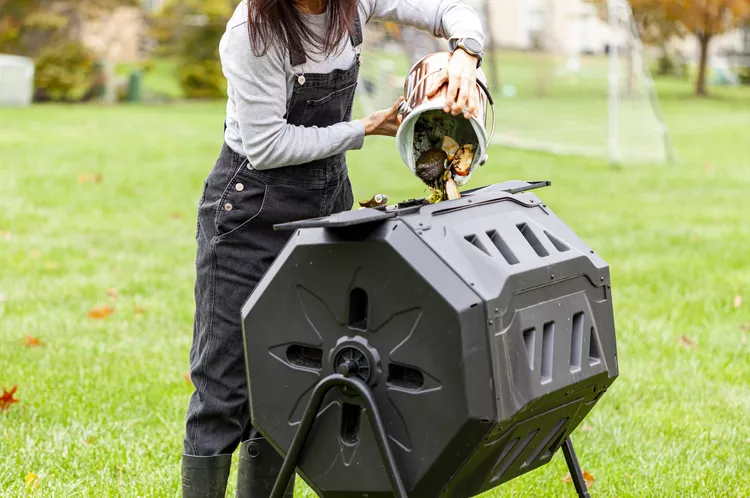
Composting may not completely break down the oils in poison ivy, so your best bet for disposing of pulled plants is to put them in the trash in a sealed bag. Take precautions to ensure that your method of disposing of the plant doesn’t cause problems for other people later (like the trash pickup service).
Never burn poison ivy, either with a flame weeder or in a burn pit to dispose of brush. The smoke from burning poison ivy can cause the same allergic reaction as on the skin but in the eyes, nose, mouth, throat, and lungs. Inhaling it has been fatal in rare cases.
2. Apply a Chemical Treatment
Commercially sold herbicides identified as suitable for use on poison ivy can be applied following the directions on the label. While they effectively kill the plant, the stems, leaves, and vines remain; they can still cause a rash if touched, even when dead. Chemical treatment is most applicable for an area where you don’t want poison ivy to spread but that doesn’t have human traffic. It’s a fast way to treat a large area covered in low groundcover vines. Follow all precautions and monitor the area for re-emergence of vines from the roots.
Don’t spray herbicides containing glyphosate for poison ivy growing on trees because the tree can absorb the herbicide and be injured or killed.
3. Pour Boiling Water on Poison Ivy
Pouring boiling water on poison ivy tissues and roots will kill or severely knock back the plant. This can be a good solution for a single plant or two growing up your fence or in driveway cracks. It may not kill the roots the first time, and it is most effective on young plants. Of course, carrying boiling water around and pouring it out carries its own hazards so be careful of burning yourself.
4. Smother Poison Ivy
A small invasion of poison ivy in a garden bed or corner of the yard where you don’t mow can be smothered with anything that blocks all light. Just as grass can be killed by leaving a piece of plywood or a dark tarp on it, poison ivy can be smothered and killed. This method works well near other plants where you may not be able to use weed killers, especially if you don’t want to get close enough to hand pull.
Poison ivy is shade tolerant, so you must block all light. Leave the covering in place for a few weeks, and then check if the plant is dead.
5. Use a Homemade Weed Killer
Many homemade weed killer recipes, such as horticultural vinegar and dish soap, can be effective against poison ivy. While less harsh than synthetic chemical herbicides, these are still lethal to plants and can harm nearby growth you don’t want to get rid of. Watch for overspray, and don’t forget to wear protective clothing when needed.
If poison ivy is growing where you or another person might contact it later, especially when it is dead and inconspicuous, you should physically remove it instead of merely killing it. Dead poison ivy vines and leaves still contain urushiol and can cause a rash even after being dead for several years.